(First created: 01/03/2026 |Personal Opinion)
As a high school band parent, each year I go through the cycle of the Fall excitement when the marching season starts followed by the Spring emotions when the band program wraps in a final performance and ceremony. For the last two years, I can’t help but feeling sad when the seniors come on stage being honored and bidding their farewell. My sadness doesn’t come from the fact that I will never see them again but because, as I clap and cheer for them when they smile and wave to us in the limelight, a cold realization creeps in my mind: for some of them, this very moment is the peak of their lives!
Delay Your Peak
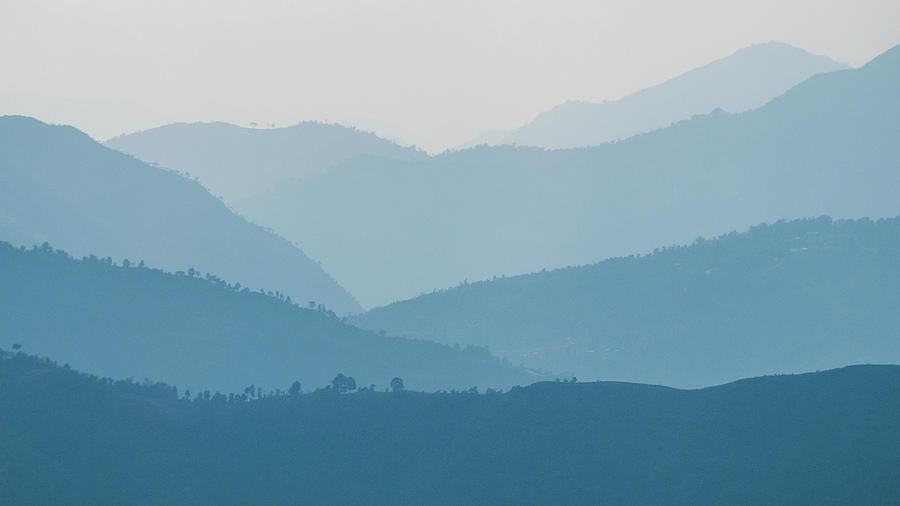
On our annual drive into the snowy mountains before Christmas, my son anxiously flipped through his phone in anticipation that the early admission actions of his dream college may come out in any minute. While he regretted that he should’ve studied harder or faked some leadership to boost his chance in the twisted college admission process, I assured him that an early setback in real life is a good thing. Think about it, for those K-12 students helicoptered by their parents, college admission is their first contact with reality! I then pointed to the layers of mountain ranges around us, explaining how each layer is like a person’s life trajectory, and delivered my edict to my son: delay your peak!
Life Trajectory
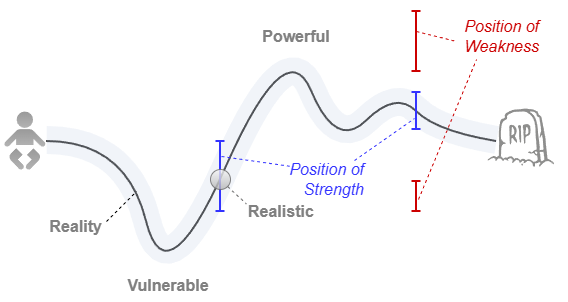
People often conflate the word “powerful” with “strong” and likewise “vulnerable” with “weak”. But in fact they’re orthogonal:
- The state of powerful and vulnerable are external to one self.
- Which university you go to
- How much money you make
- What title you hold
- The state of strong and weak are internal to one self.
So a powerful man can be weak and a vulnerable homeless person can be strong. To answer the question of what determines a person’s position in the strong-weakness spectrum, I propose below lemma:
ISEE Lemma 1:
He who knows and accepts his reality is strong.
As long as one doesn’t deviate too much from his reality, he can improve on it. On the other hand, being too far away from one’s reality, either above or below, trouble ensues:
- Over-Reality
- Fantasy
- Grandiose Narcissism
- Exceptionalism
- Under-Reality
- Anxiety
- Depression
- Vulnerable Narcissism
- …
Uncontrolled oscillation between over and under-reality may happen:
- Fantasy is shattered by reality
- Fantasy is irrational and blind
- Reality is brutal and rational to the cent
- The self descends into depression
- To cope with the depression, the self resorts to fantasy again
- Worse, some resorts to medically induced fantasy
- Repeat step 1 to 3 in a downward spiral fashion
ISEE Trajectories
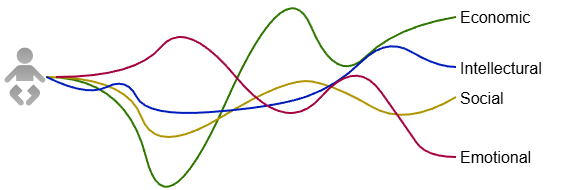
Life trajectory can be further decomposed into several components, chief among them:
- Intellectual
- Social
- Economic
- Emotional
Wellness
How does the ISEE components combine to affect one’s wellness? I propose below lemma:
ISEE Lemma 2:
Wellness is inversely proportional to the gaps among the ISEE trajectories.
Gap between any two component leads to tension:
- A person with high economic status but low social status is not well
- Hence American riches tried to marry into poor British royal families.
- A person with high intellectual status but low economic status is not well
- Hence he either turns his intellectual power into wealth or use his despise of the wealth to fill up the gap.
- A person with high economic status but low emotional status is not well
- Hence he quit his highly paid but toxic Meta or AWS job to seek work life balance elsewhere.
Inter-personal Gap
ISEE Lemma 2 applies to the wellness of inter-personal relationship. When at least one ISEE trajectories of two person diverged too far, “oh, we grew apart“.

Class
Chronologically and structurally persisted inter-personal gaps cements into class. The twisted and brutal reality makes sure that inter-class mobility is extremely hard.
- Social class
- Capitalist class
- Upper Middle class
- Lower Middle class
- Working class
- Working-poor class
- Underclass
- Intellectual class
- Truth-seeker class
- Truth-teller class
- Opinion-holder class
- Conspiracist class
- The lowest of the low. Knowing their opinions are not true but still spread them for profit. Shame on you!
Stable Relationship
How do you explain the relationship between two person with huge gaps, such as that of a successful businessman and his trophy wife? To answer this question I propose below Lemma:
ISEE Lemma 3:
In a stable relationship, there must be at least one thing of one person that the other person can look up to.
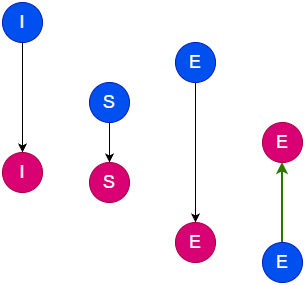
Geometrically, if we connect the ISEE dots of a person into a curve (order doesn’t matter), a stable inter-person relationship can be sustained only when the two person’s ISEE curves cross each other:
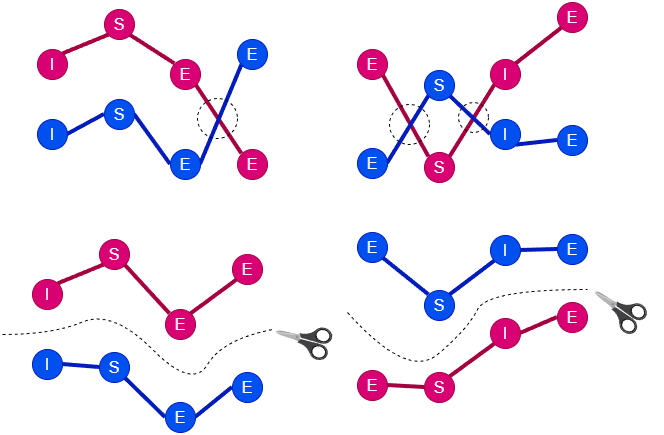
The other way to put it, a relationship between two person is not stable if one person pareto dominates the other person in all aspects.
The Test of Time
The next question to ask is will the things a person looks up to in another person withstand the test of time? For example, If beauty is the only thing the business man sees in his trophy wife, as beauty decays with time, he has no other option but to seek another trophy.
References
- The Narcissism Spectrum Model: A Synthetic View of Narcissistic Personality. The problem with narcissism is the ego-centric focus on oneself rather than one’s reality.